GHRH analogues vs growth hormone secretagogues
Updated
In short
GHRH analogues and growth hormone secretagogues act on two different receptors. GHRH analogues — Sermorelin, CJC-1295, Mod GRF 1-29, Tesamorelin — engage the GHRH receptor. Secretagogues — Ipamorelin, GHRP-2, GHRP-6, Hexarelin — engage the ghrelin receptor, GHS-R1a. Protocols often pair one from each class, because the two receptors are separate inputs to the same pituitary cells.
Two receptors, one cell type
This is the single distinction that organises most of this part of the catalogue. Confusing the two classes leads to protocols that unintentionally stimulate the same receptor twice, or that treat two compounds as interchangeable when they act on different receptors.
| GHRH analogues | Secretagogues (GHS) | |
|---|---|---|
| Receptor | GHRH receptor | Ghrelin receptor (GHS-R1a) |
| Derived from | Growth hormone releasing hormone | Synthetic; unrelated to GHRH |
| Catalogue examples | Sermorelin, Mod GRF 1-29, CJC-1295 DAC, Tesamorelin | Ipamorelin, GHRP-2, GHRP-6, Hexarelin |
| Typical length | 29-44 residues | 5-6 residues |
| Main engineering problem | DPP-IV cleavage and short half-life | Selectivity across pituitary axes |
The GHRH analogues
Sermorelin is GHRH(1-29) amide — the shortest fragment that retains full activity, and therefore the natural reference structure. Everything else in the class is Sermorelin's backbone with a modification aimed at the same problem: unmodified GHRH is cleaved quickly by dipeptidyl peptidase IV.
- [Mod GRF 1-29](/peptides/cjc-1295-no-dac-5-mg) — four amino acid substitutions at the DPP-IV cleavage site. Sold as CJC-1295 without DAC.
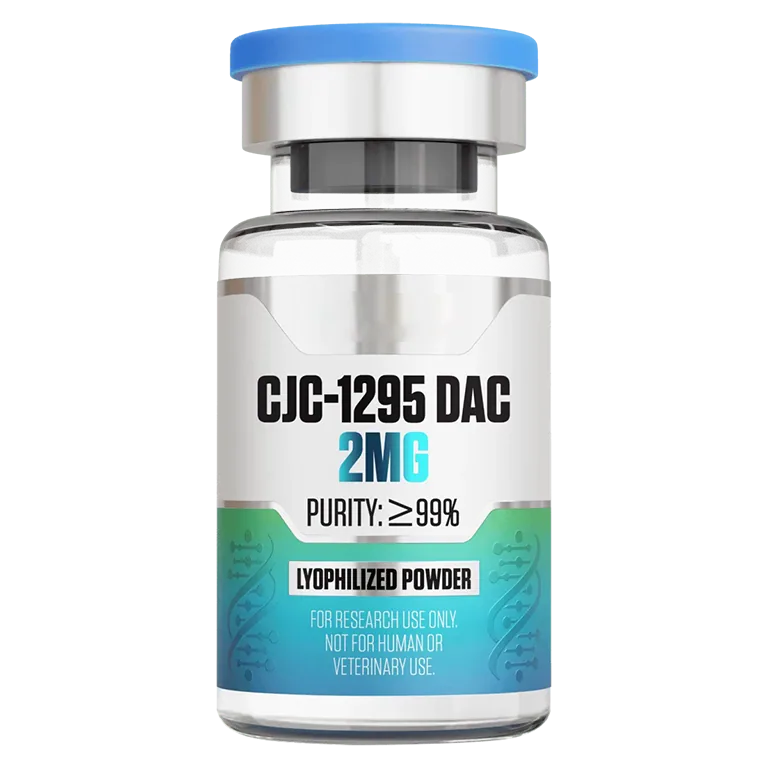
- [CJC-1295 DAC](/peptides/cjc-1295-dac-2-mg) — the same backbone plus a linker that binds covalently to serum albumin, which is what extends circulating half-life dramatically.
- [Tesamorelin](/peptides/tesamorelin-5-mg) — built on GHRH(1-44) rather than (1-29), with an N-terminal acyl group blocking cleavage. Different backbone, not just a different terminal modification.
The secretagogues
The secretagogues are short synthetic peptides with no structural relationship to GHRH. GHRP-6 came first and remains the benchmark most later compounds are compared against. GHRP-2 is more potent. Hexarelin additionally binds CD36, which is why it turns up in cardiovascular literature that the others do not.
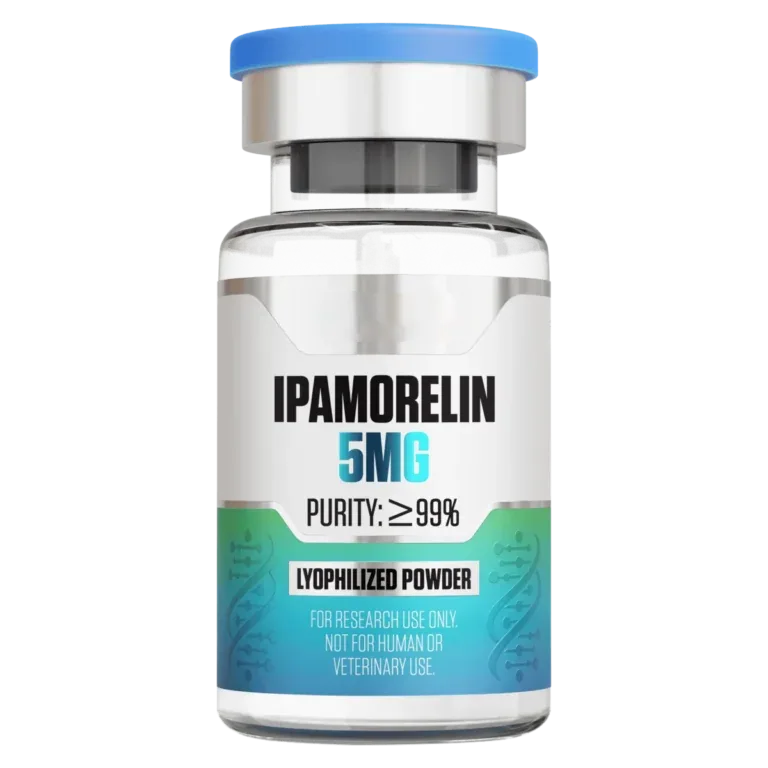
Ipamorelin displaced the older hexapeptides in most research use for one reason: selectivity. The earlier compounds raise prolactin and cortisol alongside their target effect, which confounds any readout sensitive to those axes. Ipamorelin does so markedly less.
Why protocols pair one of each
Because the two receptors are separate inputs, protocols routinely pair one compound from each class — most commonly a GHRH analogue such as CJC-1295 with a selective secretagogue such as Ipamorelin.
Everything here is stocked as a single-peptide vial, so the ratio between the two arms is set by the experimenter at reconstitution and each contribution stays separable.
Compare the two classes

Frequently asked questions
- What is the difference between a GHRH analogue and a growth hormone secretagogue?
- They act on different receptors. GHRH analogues such as Sermorelin and CJC-1295 engage the GHRH receptor and are derived from growth hormone releasing hormone. Secretagogues such as Ipamorelin and GHRP-2 engage the ghrelin receptor GHS-R1a and are synthetic peptides unrelated to GHRH.
- What does DAC mean in CJC-1295 DAC?
- DAC stands for drug affinity complex — a linker that binds covalently to serum albumin, greatly extending the peptide's circulating half-life. CJC-1295 without DAC, usually written Mod GRF 1-29, has the same tetrasubstituted GHRH(1-29) backbone without that linker.
- Why is Ipamorelin preferred over GHRP-2 and GHRP-6 in research?
- Selectivity. GHRP-2 and GHRP-6 show meaningful cross-activity at the ACTH and prolactin axes, which confounds readouts sensitive to those hormones. Ipamorelin is markedly more selective for the ghrelin receptor.
All products referenced are sold for research, laboratory, or analytical purposes only, and are not for human consumption.